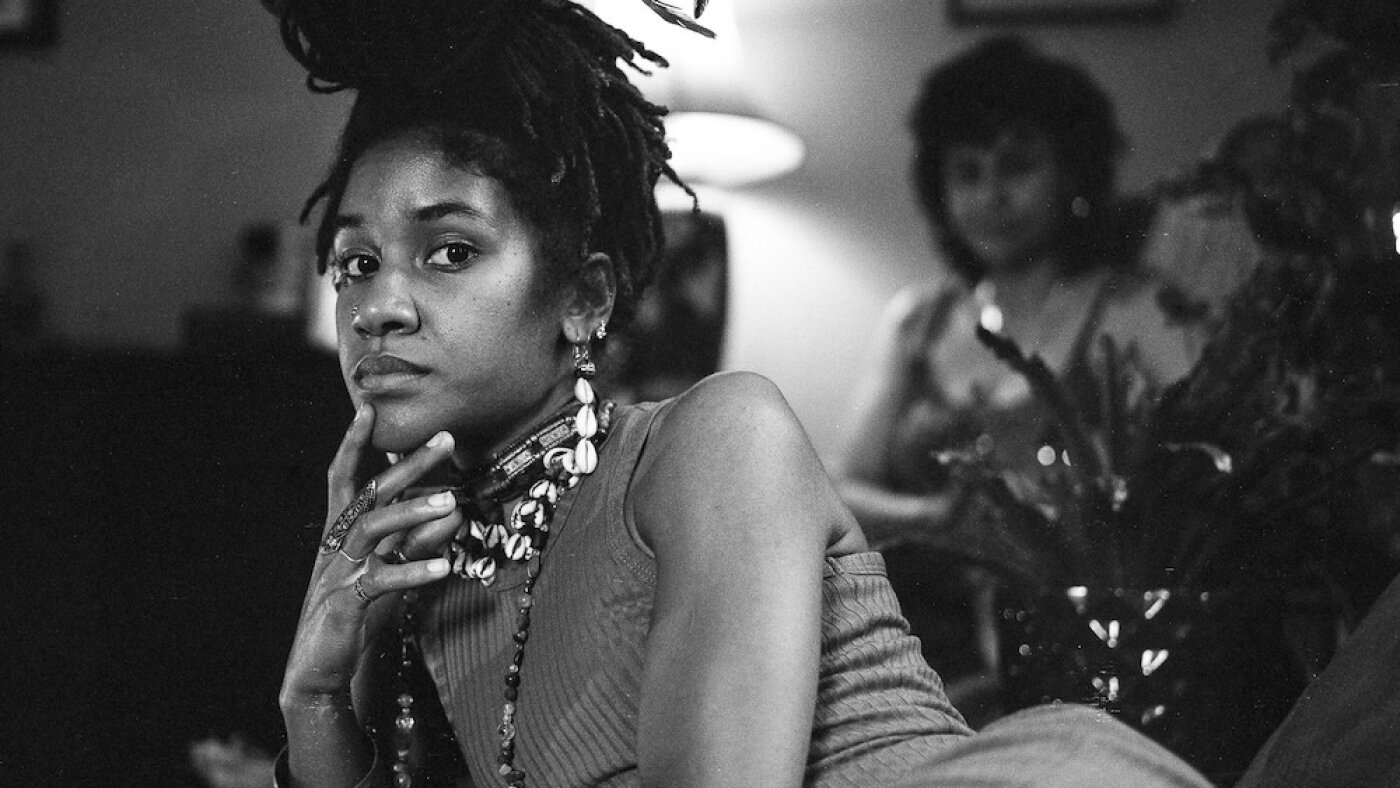
Ibtisam Tasnim Zaman, a Black lesbian American, conceptual, multidisciplinary and intersectional feminist artist and one of Laila Stevens’ close friends, at home with her momma, Mari-Eva Mendes.
Laila AnnMarie Stevens
hide caption
toggle caption
Laila AnnMarie Stevens
For five years, Laila AnnMarie Stevens documented multiple generations of her family as they moved from New York City to North Carolina for better opportunities and “a different quality of life.” Stevens says she saw it as a kind of reversal of the historic Great Migration of the early 20th century, in which thousands of Black families moved from the South to the North to escape racial injustice and build better lives for themselves.
NPR asked Stevens about her photographs, which also document the landscape of the South and multiple generations within both her biological and chosen family, from friends, siblings, aunties and cousins to grandparents, great-grandparents and even living great-great grandparents.
This interview has been edited for length and clarity.
What gave you the idea for this project?
I was a sophomore at FIT (New York City’s Fashion Institute of Technology), tasked with developing a long-term series rooted in something of genuine significance.
Naturally, I found myself returning to the realities of being a Black queer woman and the social atmosphere surrounding those intersecting identities — both the harmful conditions imposed upon them and the systems of care and support that exist alongside them.

Swamp trees brush against a local river across from a cotton field in Clayton, N.C.
Laila AnnMarie Stevens
hide caption
toggle caption
Laila AnnMarie Stevens
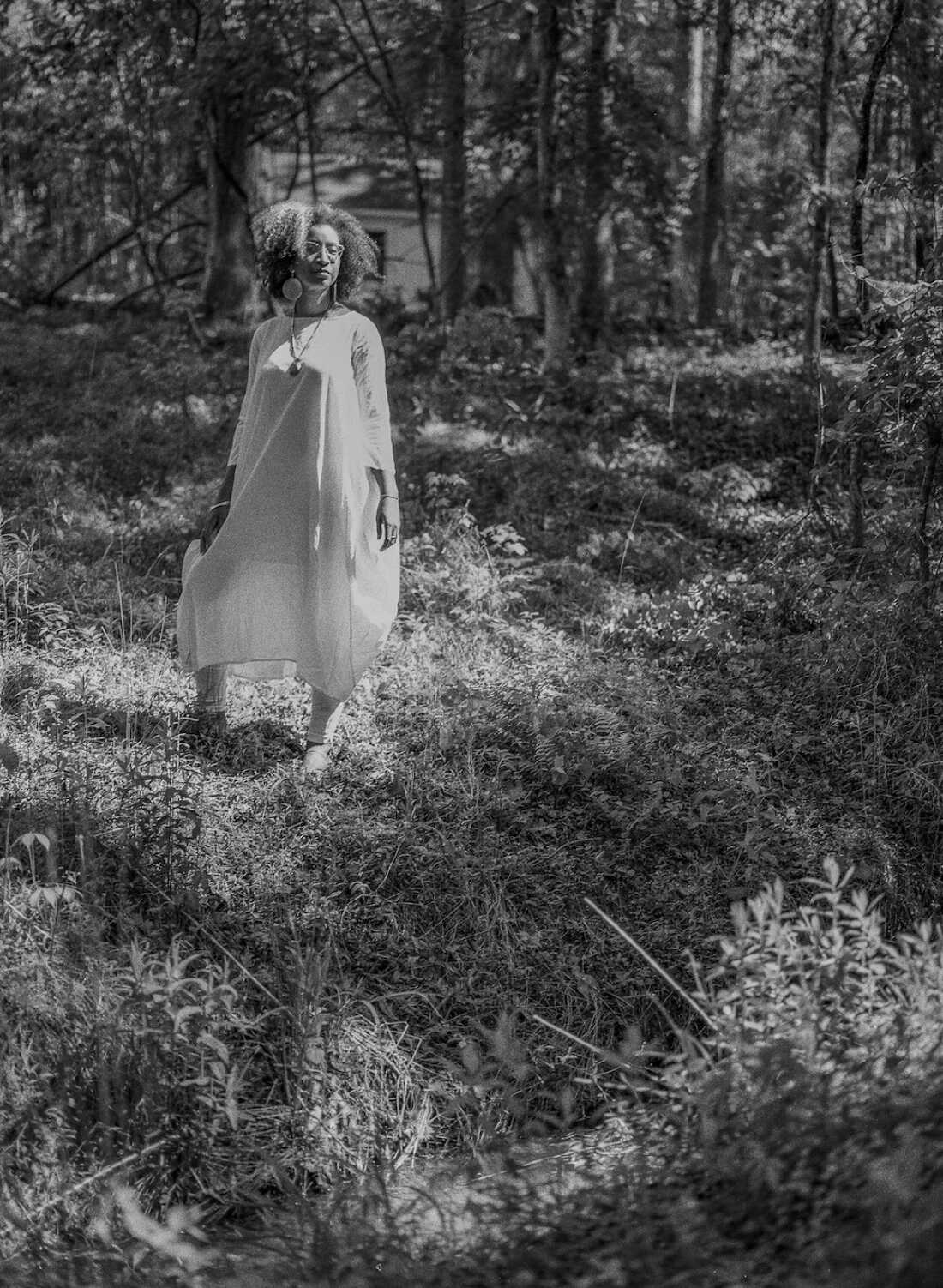
Author Alexis Pauline Gumbs stands in the backyard of her home in Durham, N.C. “We knew we had to love the women we were and the women of our lineages,” Gumbs wrote in Briona Simone Jones’ anthology, Mouths of Rain — “our grandmothers and great-grandmothers, the women we never got to hold, the people coming after us and ourselves and the bridge and an invitation to all of it.”
Laila AnnMarie Stevens
hide caption
toggle caption
Laila AnnMarie Stevens
Around the same time, I watched my sisters begin moving to different states, and I became increasingly fascinated by metaphor within the contemporary photographic landscape. Their movement, distance and transition started to mirror larger questions I was already considering: ideas of migration, separation, intimacy, protection and the ways Black women carry home within themselves, even as physical spaces shift around them.
You’ve described your family’s move from Queens to Clayton, N.C., as having been motivated by the new wave of reverse migration; how so? And why North Carolina?
There was a growing realization that building and sustaining a family in Queens increasingly meant having less access to the basic needs associated with raising one — space, a backyard, larger rooms and a certain sense of stability. The move was initially rooted in circumstance and timing within our personal lives, but as it unfolded, I began to understand it within a much broader social context.

At the time, the codirectors of the arts nonprofit organization The Black School, Joseph Cuillier and Shani Peters — who had themselves relocated from New York to New Orleans — encouraged me to look into The New York Times columnist Charles M. Blow’s The Devil You Know: A Black Power Manifesto, which calls for African Americans to consider reverse migration south as a means of collectively dismantling white supremacy by engaging ancestral homeland as a political base. Although I’m no longer working with The Black School, that period remains an important part of my thinking around Black spatial politics, belonging and collective return.

Photographer Laila AnnMarie Stevens’ nieces race down the neighborhood on their new bikes in Clayton, N.C.
Laila AnnMarie Stevens
hide caption
toggle caption
Laila AnnMarie Stevens
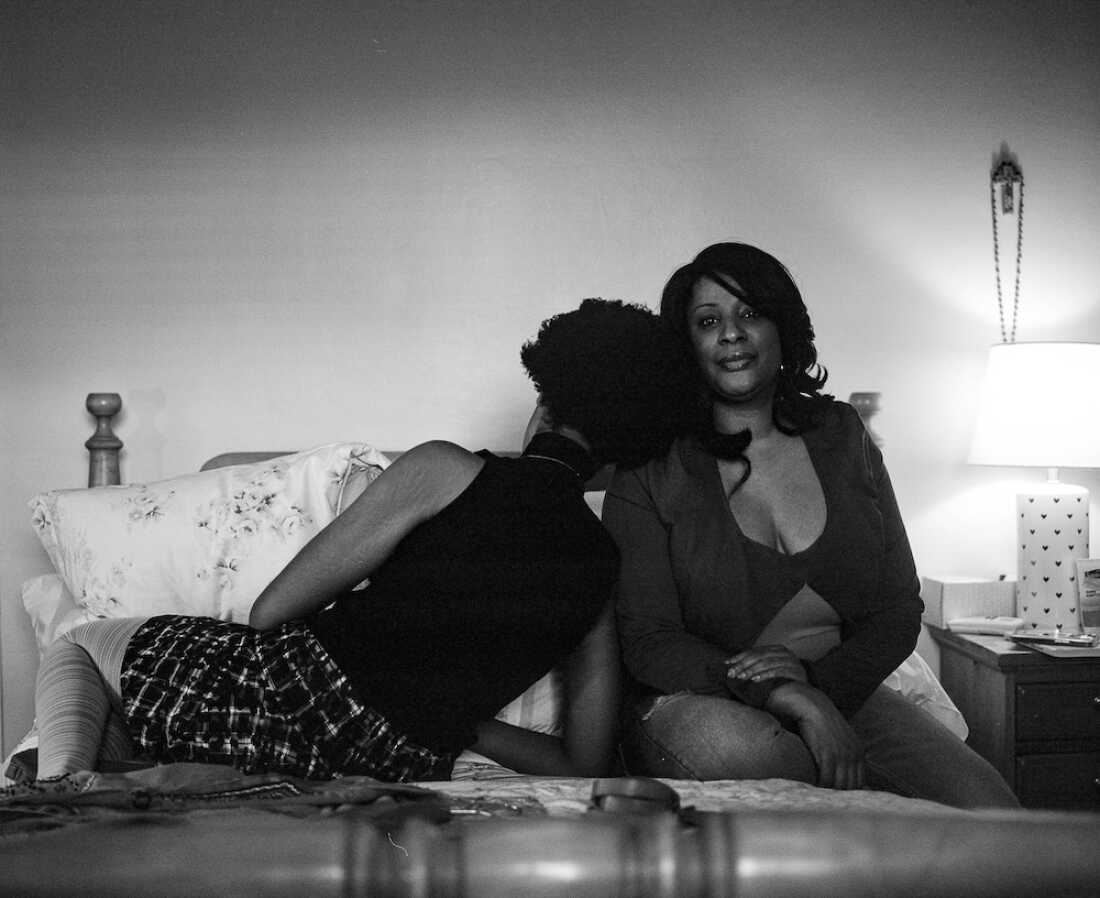
Mikaela Gumbel, 20, sits with her mother in Mikaela’s childhood bedroom in Westchester County, N.Y.
Laila Annmarie Stevens
hide caption
toggle caption
Laila Annmarie Stevens
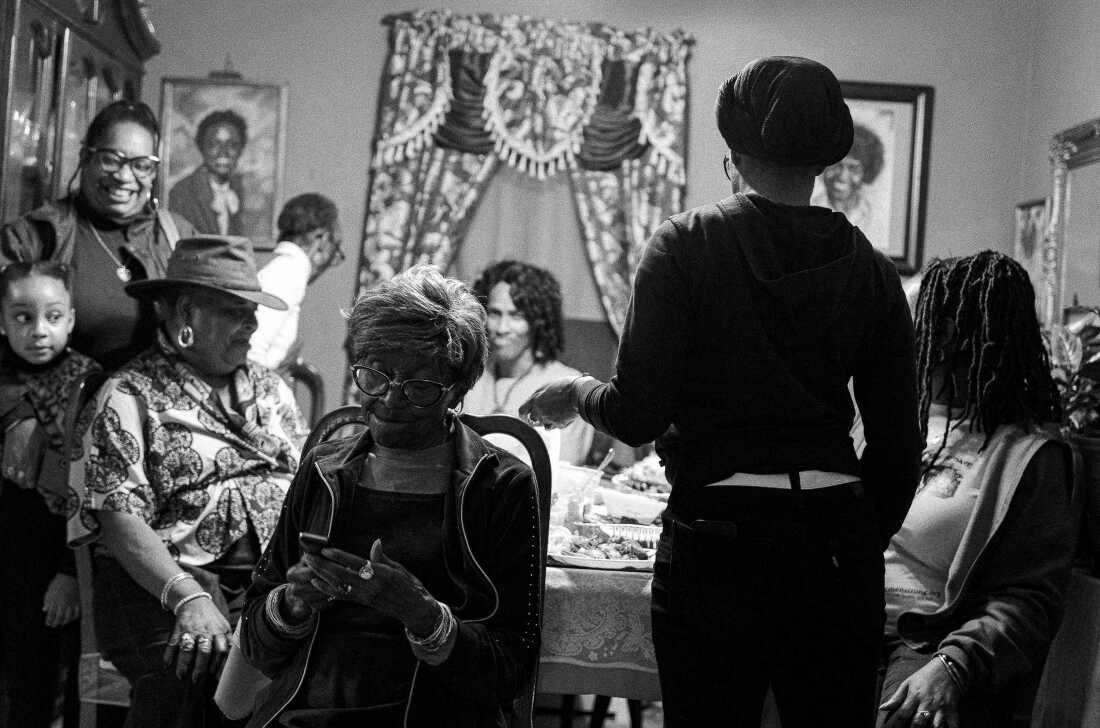
The women of Stevens’ maternal family gather around a family dinner in Cambria Heights, a neighborhood in Queens, N.Y.
Laila AnnMarie Stevens
hide caption
toggle caption
Laila AnnMarie Stevens
The text gave language to something I was already witnessing firsthand: the contemporary wave of reverse migration among Black families returning to the South in search of affordability, space, community and a different quality of life. It helped me understand that my family’s move to Clayton was not simply an isolated personal decision, but part of a larger historical and cultural movement unfolding across the United States.
What also became meaningful to me later was realizing that my grandfather had lived in North Carolina for many years. While that history was not an intentional factor in choosing to move there, it created an indirect connection to ancestry and lineage that only revealed itself afterward. In that way, the relocation began to feel layered — both circumstantial and deeply historical — almost as if we had unknowingly traced our way back toward something already embedded within our family history.
What did you learn about your family over the course of working on this series? What surprised you? Did you learn anything about yourself?
There is a very specific moment that happens right before the portrait is taken: I give direction, they settle into stillness and then instinctively move into a pose of their choosing. In those moments, it almost feels as though they transform back into little girls again. There is something deeply vulnerable about watching someone allow themselves to be seen, especially women who are so often positioned as caretakers, documenters or protectors for everyone else.
I also began thinking about the ritual of picture-taking itself — particularly within Black family life. So often it is the mother behind the camera saying to the daughter, “pose,” documenting everyday moments. But how often do our daughters stop and ask, “Mom, can I take a picture of you?” That reversal became important to me. The portraits were not only about documenting my family, but about offering space for the women in my life to be looked at with care, attentiveness and emotional reciprocity.
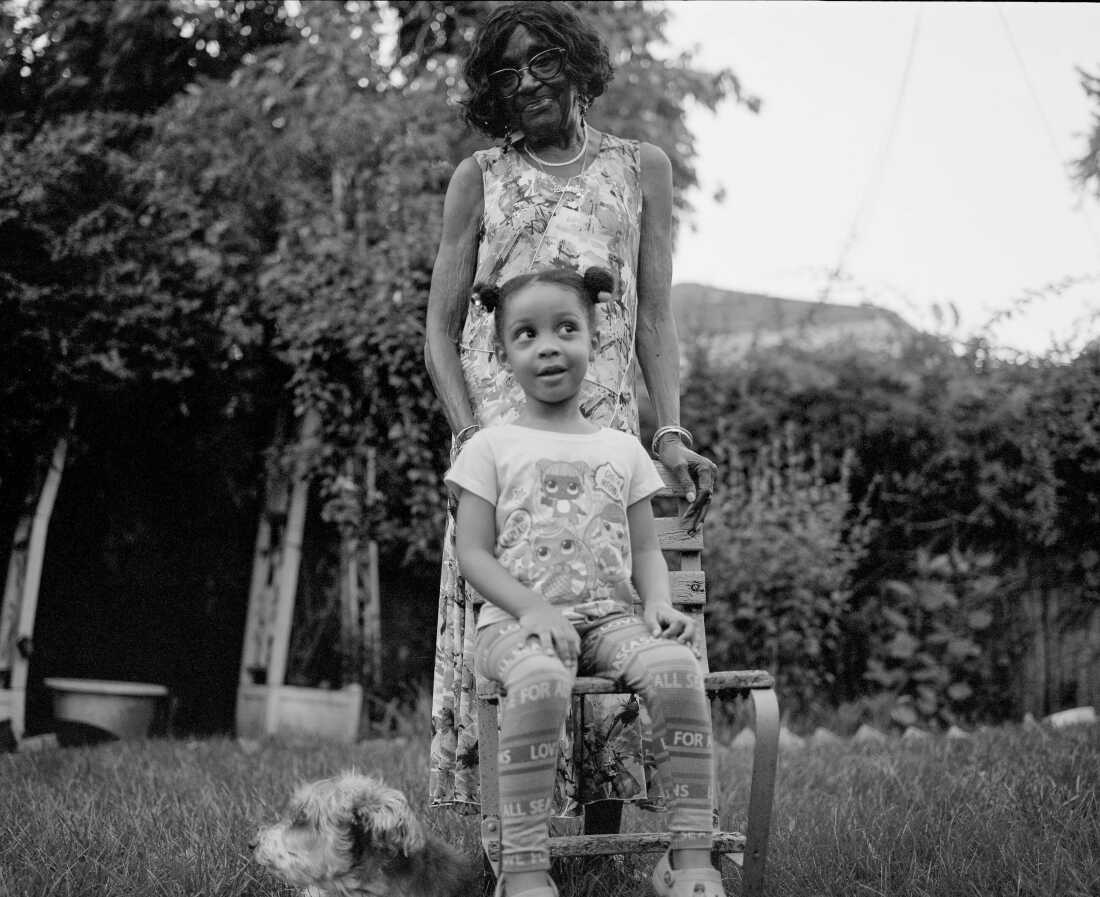
Embodying five living generations, Stevens’ niece Sage Belgrave, 5, sits in front of her great-great-grandmother Georgia Monroe, 92, and the family dog, Benji, in the backyard of Monroe’s home in Cambria Heights.
Laila AnnMarie Stevens
hide caption
toggle caption
Laila AnnMarie Stevens

On their first time traveling by airplane from their home in South Carolina, Stevens’ cousins Larrisha and Takera Myers stayed with Morgan, one of Stevens’ best friends who was born and raised in North Carolina. Here, the three hold hands in the Bedford–Stuyvesant neighborhood of Brooklyn, N.Y.
Laila AnnMarie Stevens
hide caption
toggle caption
Laila AnnMarie Stevens
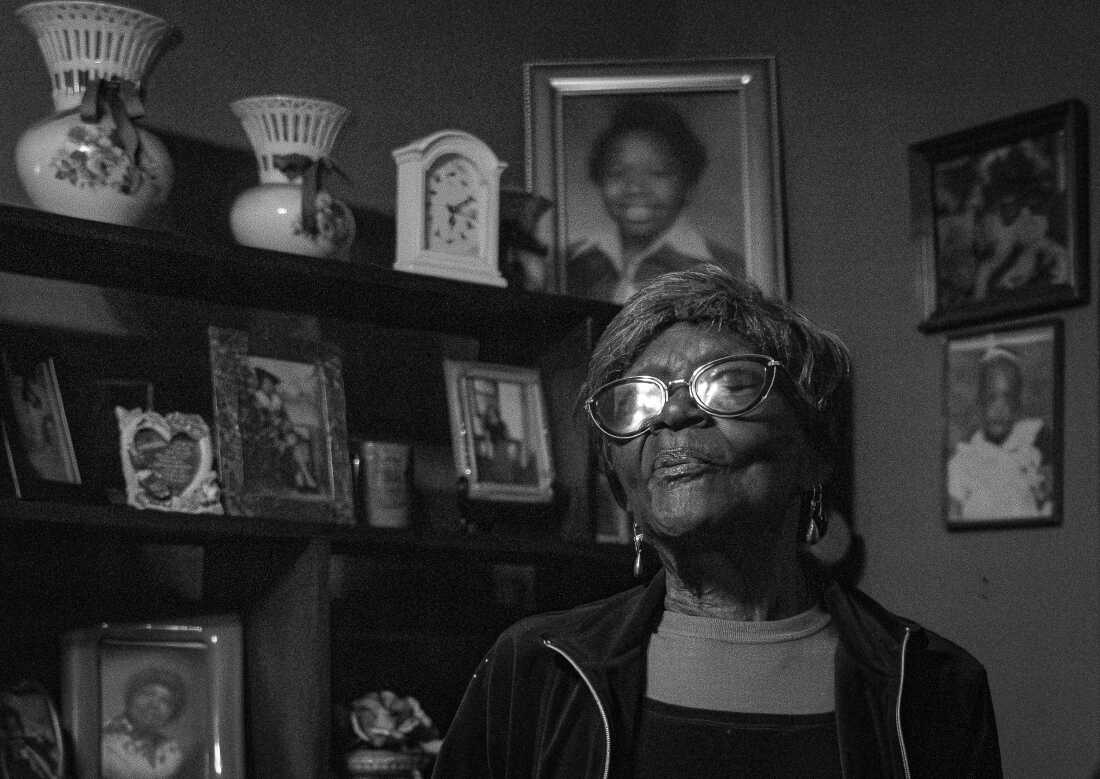
Stevens’ great-grandmother Georgia Irby, 95, in her home of more than five decades in Cambria Heights.
Laila AnnMarie Stevens
hide caption
toggle caption
Laila AnnMarie Stevens
What was the most challenging part of working on this series? What was the most rewarding?
The most challenging part of working on this series was finding a way to visually and aesthetically bridge the images that originated within my family while extending that same sense of sisterhood to the friends I photographed throughout the project. I wanted to look at my chosen sisters through the same lens — emotionally, intimately and visually — understanding how they have shaped my life, not only as close companions, but through the act of “sistering” itself, as a practice.
The most rewarding experience was witnessing my dear friend, Ibtisam Tasnim Zaman, meet my grandmother by way of working together on this project. The daughter of lesbian mommas, Zaman had also grown to be a part of my chosen family and was one of the primary sitters in the series. She painted a portrait of my grandmother after I shared Ibtisam’s work with her. My grandmother looked at the photographs and said, “Wow, she is incredible. I would love one done of me.” That portrait now sits in my grandmother’s craft studio.
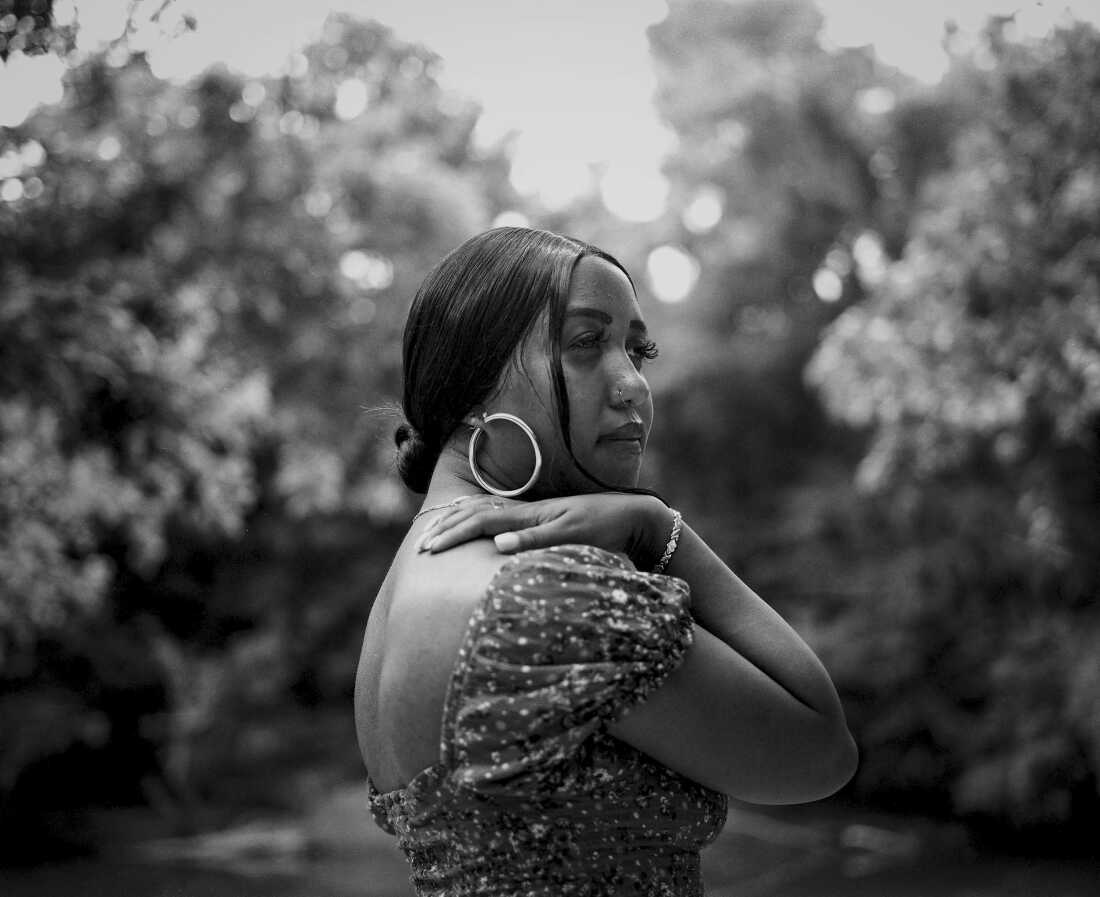
Stevens’ sister Deanna “Dee-Dee” Stevens stands in front of the swamp near her home in Clayton, N.C.
Laila AnnMarie Stevens
hide caption
toggle caption
Laila AnnMarie Stevens
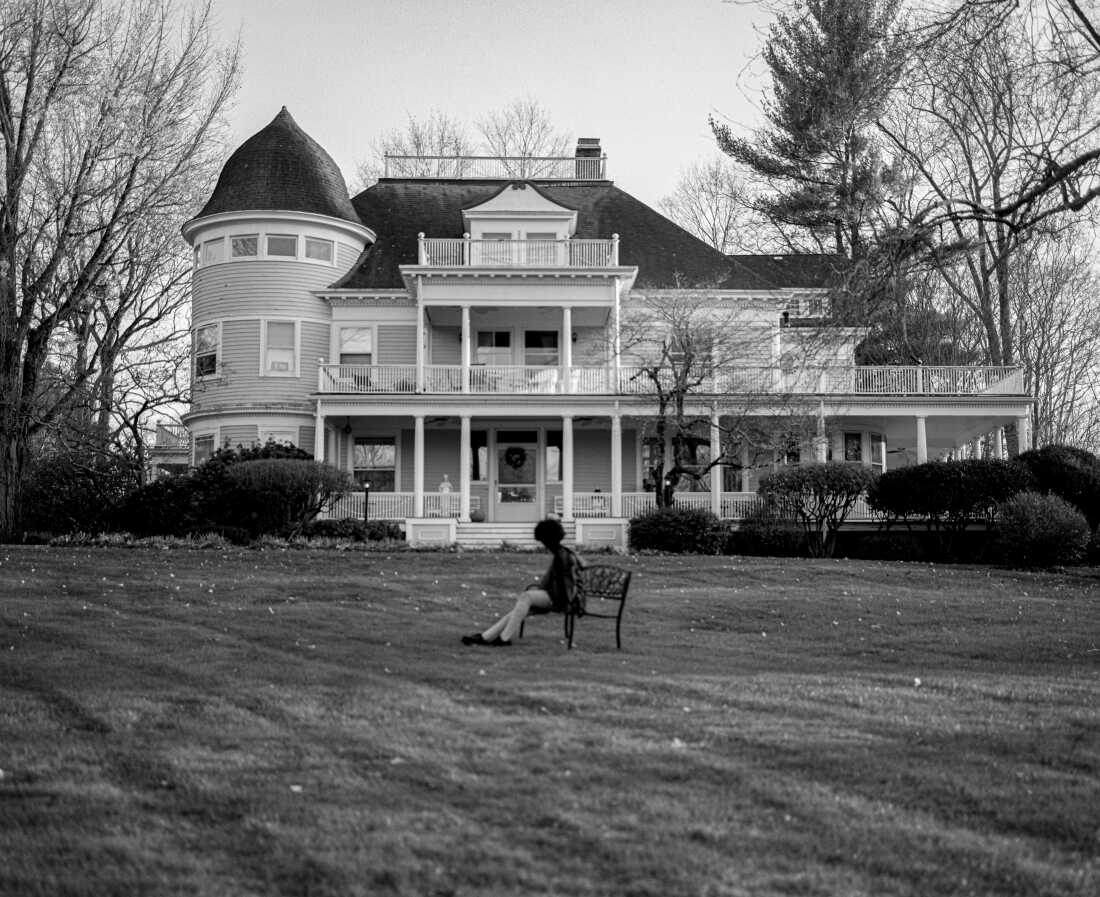
Mikaela Gumbel sits on a bench in front of her grandmother’s home in Westchester County, N.Y.
Laila AnnMarie Stevens
hide caption
toggle caption
Laila AnnMarie Stevens
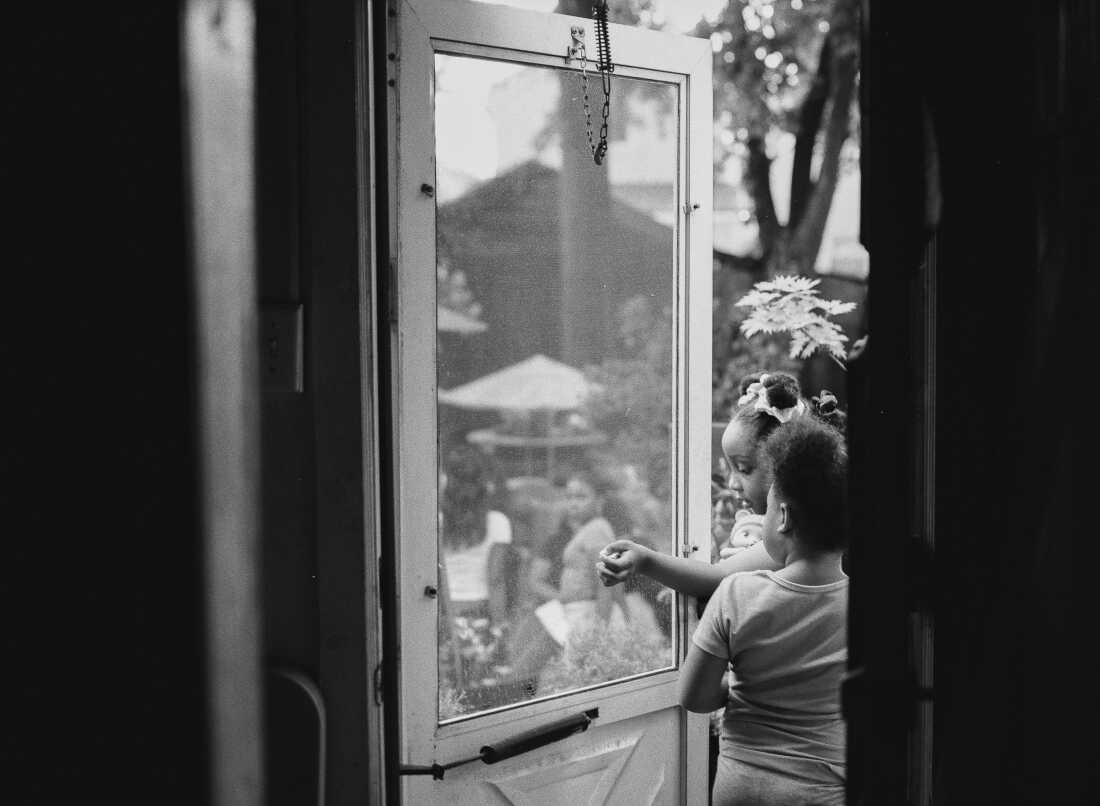
Stevens’ nieces play during a family gathering.
Laila AnnMarie Stevens
hide caption
toggle caption
Laila AnnMarie Stevens
I remember sitting in the living room as my grandmother unveiled Zaman’s painting for the first time, tears of joy and gratitude streaming down her face. It made me think deeply about how often we keep these worlds separate — our chosen family and the people who raised us. How often do our closest friends get to spend intimate time with the people who shaped us? This project became a space where those relationships could meet, overlap and exist together.
Much of your work is in color; why did you create much of this series in black and white?
Black and white allowed me to think about continuity and lineage. One thing my grandmother has always said to me is, “There are not many things you have been through that I have not also experienced,” referring to the pains and transformations of becoming an adult. That statement stayed with me throughout the making of this series.
I wanted the photographs to exist slightly outside of time — to make it difficult for a viewer 50 years from now to immediately determine whether an image had been made in 2002 or 2022. The stories within these photographs are not new; they are repetitions, echoes and continuations of the people who came before us. Black and white became a way to visually hold that continuum.

Stevens’ nieces play games at the dining room table while waiting for dinner.
Laila AnnMarie Stevens
hide caption
toggle caption
Laila AnnMarie Stevens

A replica of Mikaela’s grandmother’s house sits atop the living room piano, echoing the original exterior in miniature form.
Laila AnnMarie Stevens
hide caption
toggle caption
Laila AnnMarie Stevens
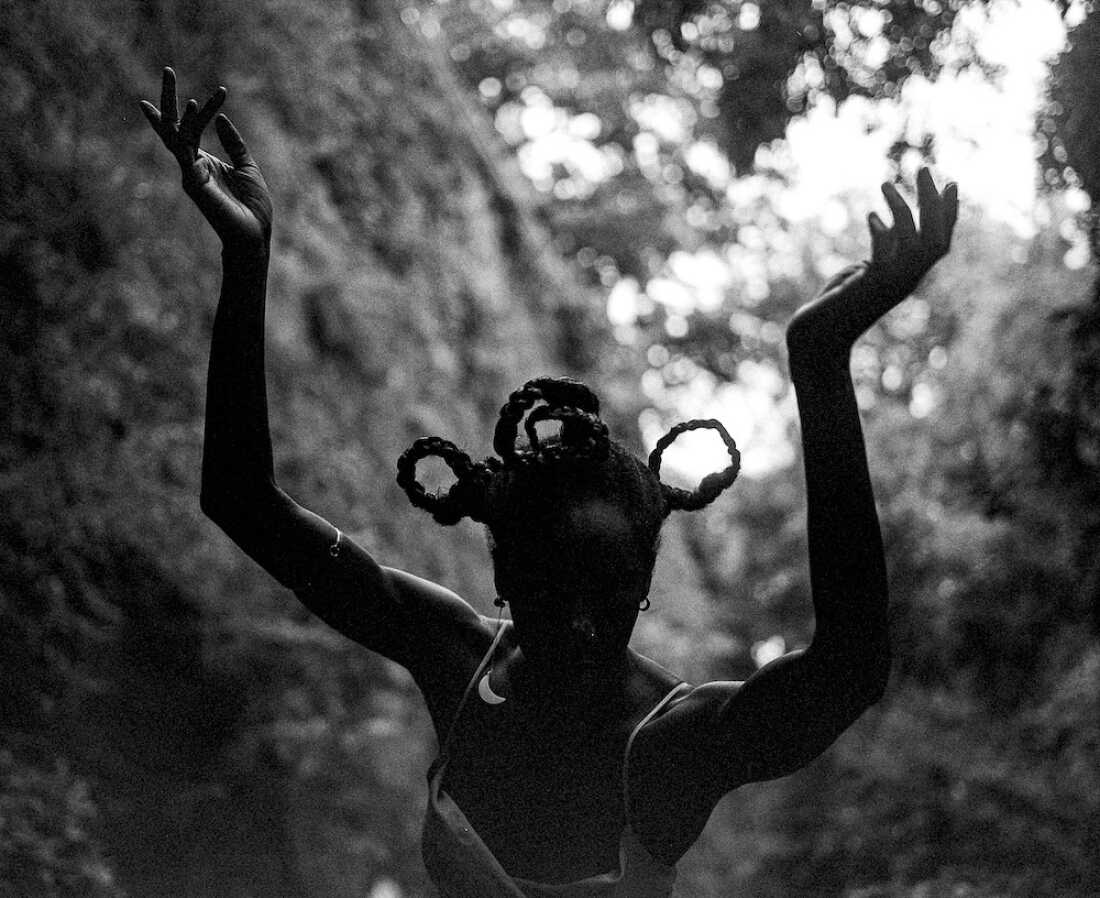
London Vasser, a close friend of Stevens’ family, poses for a photo as the imagined embodiment of Mother Nature at the Jackie Robinson Park in Harlem, N.Y. — a source of light and a mysterious, unidentifiable worldly force — felt more than seen.
Laila AnnMarie Stevens
hide caption
toggle caption
Laila AnnMarie Stevens
What’s the story behind your favorite photo from the project?
My favorite photograph from this project is an image of my 5-year-old niece with my great-grandmother in her backyard in Cambria Heights. Very few people in my peer group have the experience of witnessing five generations alive at once, and for me, there was something especially profound about seeing generations of Black women gathered together in joy, intimacy and everyday tenderness.
What draws me to the image, visually, is the way the backyard itself seems to hold them. The plentiful grass engulfs and encompasses them, creating a natural border-like frame around their bodies, almost embracing them within the landscape. There is a softness and quietness to the scene that feels deeply connected to the themes of lineage and care that run throughout the series.
I also love the subtle humor of the dog accompanying them in the frame — acting almost as a bridge between generations: a playful companion to the younger members of the family and a comforting presence to the elders.
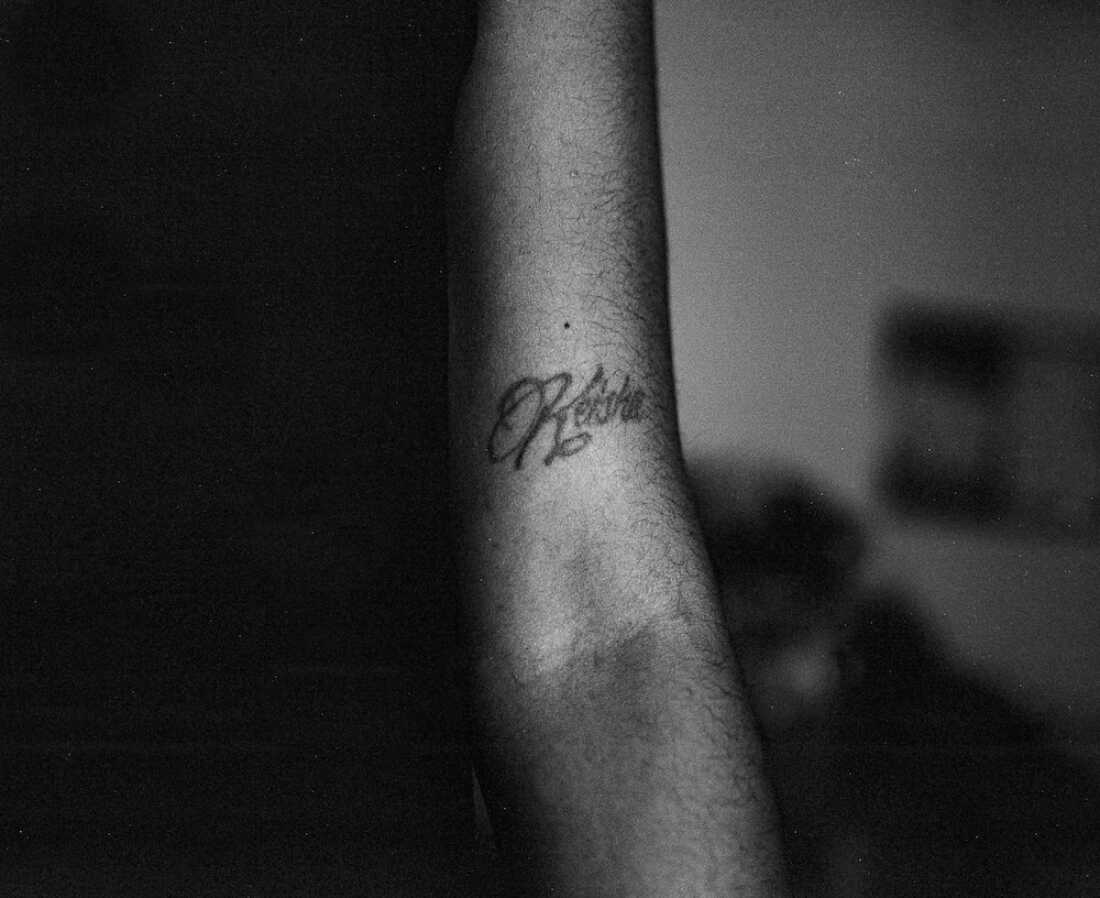
Stevens’ sister Amirah Williams, 28, shows off her tattoo of their mother’s name, Keisha — a symbol of love, legacy and appreciation.
Laila AnnMarie Stevens
hide caption
toggle caption
Laila AnnMarie Stevens

Stevens’ niece Destiny, 8, sheds a tear along the shore of a North Carolina beach. A normal response to her allergies, it also felt symbolic of the history along these Southern waters and for the gaze to lie along the shoreline, which Stevens said “asked me to reckon with the history of enslavement … Rather than directing attention outward, her gaze returned it to the act of witnessing.”
Laila AnnMarie Stevens
hide caption
toggle caption
Laila AnnMarie Stevens

Mari-Eva Mendes in one of her favorite hats from her time in Oklahoma, a look that recalls Midwestern and Southern dress and carries echoes of Black cultural adornment.
Laila AnnMarie Stevens
hide caption
toggle caption
Laila AnnMarie Stevens
What do you hope people come away with after seeing these images?
I hope people come away from these images feeling more curious about the ways they relate to the people around them. I want the work to encourage reflection on intimacy, care and interpersonal connection — particularly how our identities shape who we feel drawn toward, comfortable with or distant from.
I hope viewers begin asking themselves deeper questions: How do the intersections of race, gender, sexuality, class or lived experience influence the kinds of relationships we build? Why might we instinctively open ourselves to certain people more easily than others? Are those dynamics shaped by familiarity, social conditioning, fear, desire, protection or shared experience? And if we recognize those patterns within ourselves, do we want them to change?
For me, the series exists as both a personal archive and a sociological observation. It is interested in the emotional architecture of closeness — how people create family beyond blood, how care is practiced between generations, and how identity informs the ways we see and are seen by one another. Ultimately, I hope the images invite viewers to think more intentionally about connection, vulnerability and the communities they choose to cultivate in their own lives.
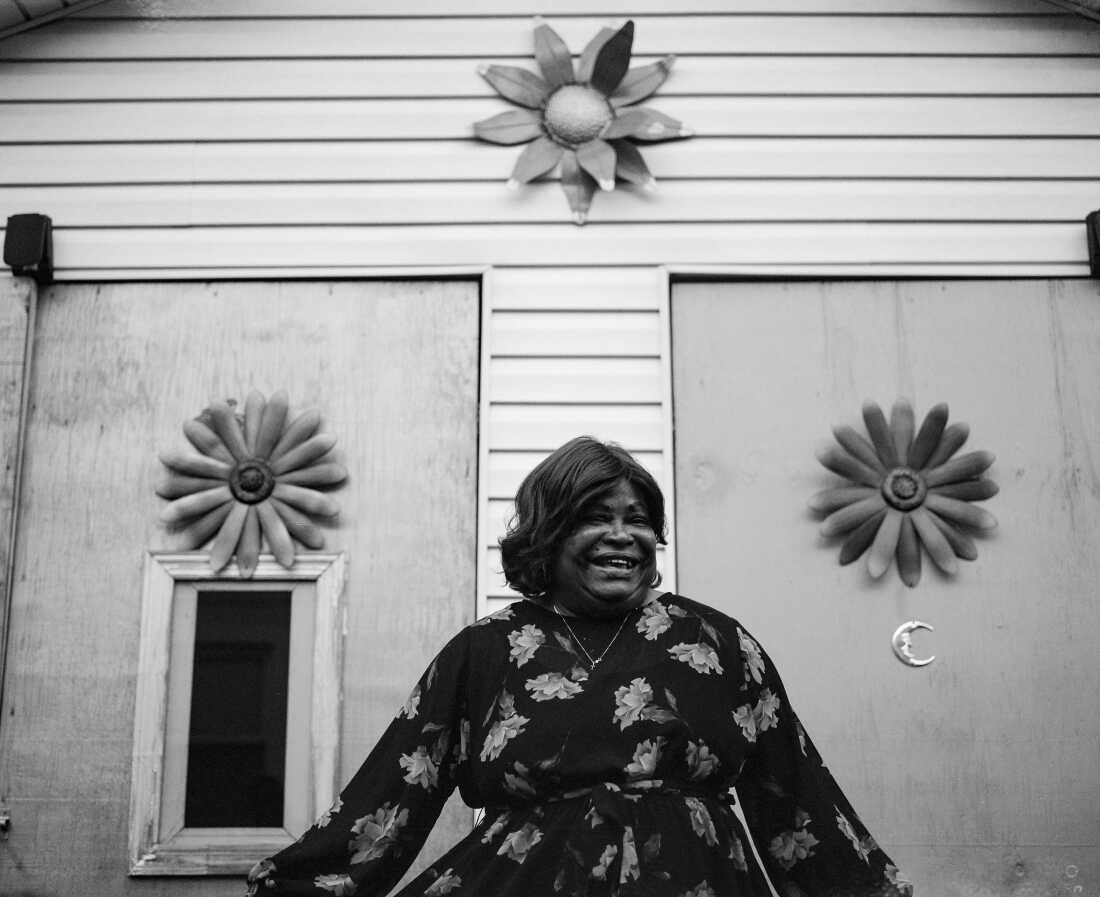
Stevens’ grandmother Lillie Coleman, 71, holds a floral dress in front of a shed decorated in flowers outside her home in Cambria Heights.
Laila AnnMarie Stevens
hide caption
toggle caption
Laila AnnMarie Stevens

Mikaela Gumbel, 20, looks in a mirror while wearing one of the many hats in her grandmother’s hat studio in Westchester County, N.Y. The studio holds years of her handcrafted work — each piece shaped with care, memory and attention to detail.
Laila AnnMarie Stevens
hide caption
toggle caption
Laila AnnMarie Stevens
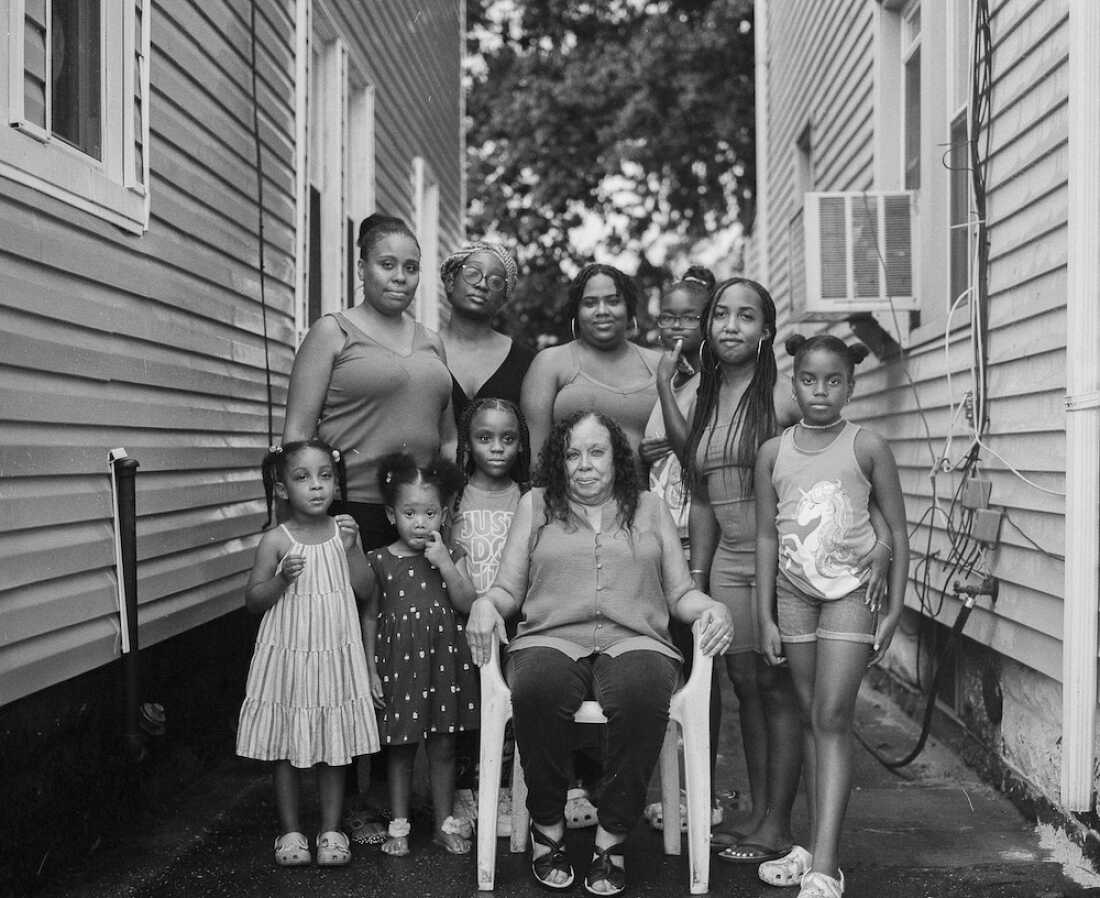
Stevens’ aunty Janice Reynolds, 74, the matriarch of the Stevens family, poses for a photo with the family’s younger generations in the driveway of her childhood home in South Jamaica, a neighborhood in Queens, N.Y.
Laila AnnMarie Stevens
hide caption
toggle caption
Laila AnnMarie Stevens
Laila AnnMarie Stevens is a photojournalist whose work focuses on contemporary kinship and community care, and she is actively redefining traditional family structures through contemporary community kinship, particularly among queer youth and the sisterhood of marginalized women and girls based in Brooklyn, N.Y. You can find more of her photography on their website, LailaAnnMarie.com, and on Instagram, at @lailaannmarie.