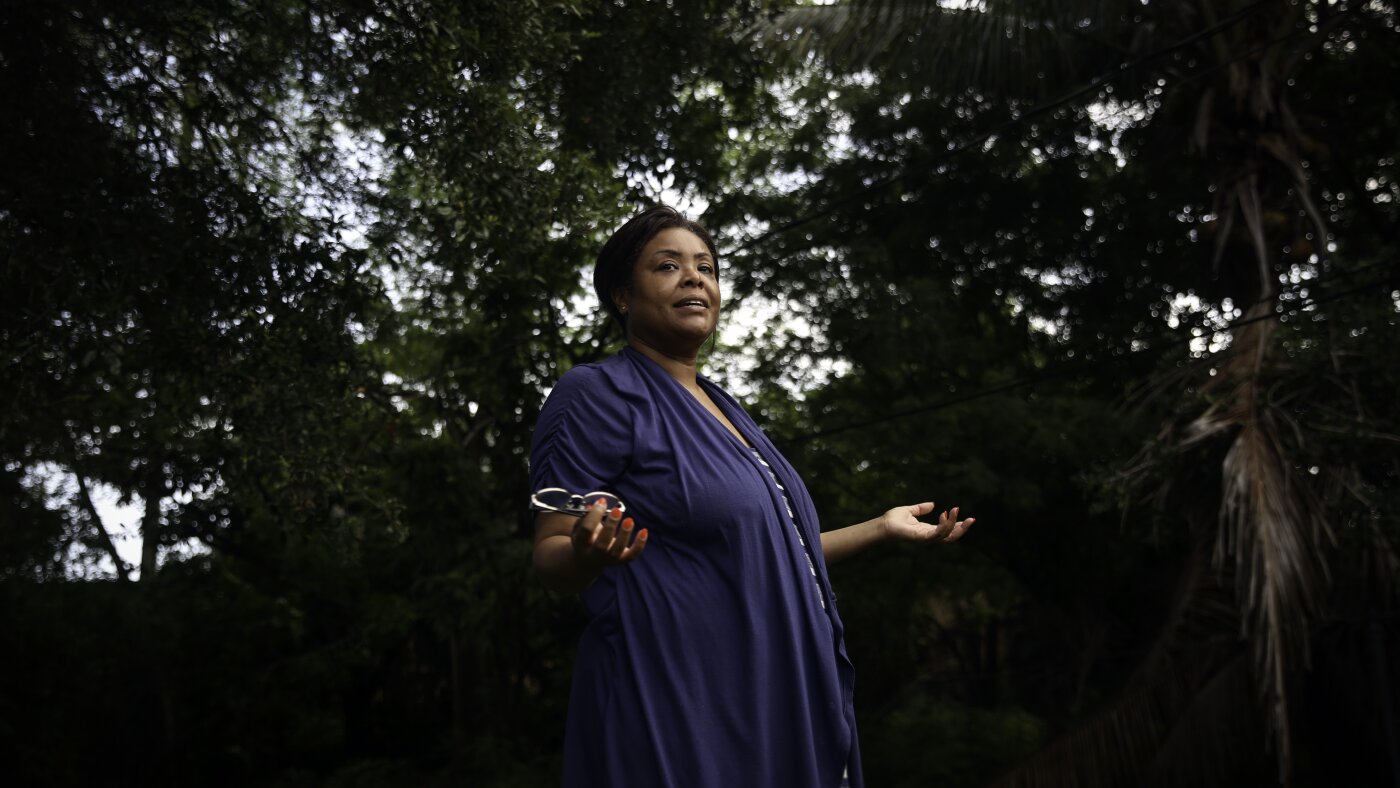
Farah Larrieux stands in her backyard in South Florida on July 27.
Reshma Kirpalani for NPR/
hide caption
toggle caption
Reshma Kirpalani for NPR/
The sun had yet to touch the horizon when Farah Larrieux returned to her South Florida home at 6 a.m. Dark circles smudged the thin skin under her eyes as she pulled large trash and recycling bins to the curb. A headache banged on the left side of her skull. The Haitian immigrant had just finished her last overnight shift at a hotel on that Monday morning. She is among the 300,000 Haitians in the U.S. losing the legal status that has allowed them to live and work in the United States.
Temporary protected status (TPS) was first granted to Haitians after Haiti’s devastating 2010 earthquake, because conditions in that country were considered too dangerous for them to return. But last month, the Supreme Court allowed the Trump administration to end those protections.
The ruling has left TPS holders bracing for an uncertain future. It has also rattled South Florida’s Haitian community, where Larrieux lives and where Haitian immigrants work across the region’s health care, hospitality, construction and service industries.
In a statement to NPR, the Department of Homeland Security defended its decision to terminate TPS for Haitians, saying, “conditions in Haiti have improved sufficiently to support the return of Haitian nationals.”

The agency also said that TPS “was never intended to be a de facto asylum program” and that “temporary protections cannot become permanent by default.”
Larrieux has lived in the U.S. for roughly two decades. She said she hasn’t been able to sleep. Sitting at a table in her small living room, she glanced at the plaques and awards recognizing her years of service in the community. She had run out of wall space to hang them, so they spilled across the table. “I can tell you that I feel empty,” she said. “Like I’m living a nightmare.”
Her refrigerator and cupboards are stocked with food because she fears leaving home and being arrested by Immigration and Customs Enforcement. A sheet of white paper covers the small glass panel in her front door because she’s afraid ICE could show up at her home. She has memorized her attorney’s phone number in case she’s detained.

A sheet of paper covers a window in the front door of Larrieux’s home because she’s afraid Immigration and Customs Enforcement could show up at her home.
Reshma Kirpalani for NPR/
hide caption
toggle caption
Reshma Kirpalani for NPR/
Larrieux works two jobs, including running her own communications business. She has paused both and plans to live off her savings while applying for asylum. She fears that returning to Haiti would amount to a death sentence because she has publicly criticized the country’s government.

Larrieux sits at her computer in her South Florida home.
Reshma Kirpalani for NPR/
hide caption
toggle caption
Reshma Kirpalani for NPR/
“If I don’t get mistreated by ICE at the detention center, I may be killed in Haiti,” said Larrieux. “My blood will be on Trump’s hands.”
Anguish replaced anger as she considered this possibility. Tears traced the terrain of her face, curving around the high mountains of her cheekbones, pooling at her chin. “They always treat us like we’re nothing,” said Larrieux, her voice shaking. “Our life has no value.”
Her fears echo those of many across Florida, home to roughly 500,000 people of Haitian descent. There are 158,000 Haitian TPS holders in South Florida, according to a recent fact sheet from FWD.us, UndocuBlack Network and the Haitian Bridge Alliance.

Miami-Dade County Mayor Daniella Levine Cava warned that ending TPS would ripple far beyond the regional Haitian community. At a news conference last week, she said Haitian TPS holders have become an integral part of South Florida’s businesses and communities.
“The termination of temporary protected status for Haitians is a heartbreaking and unnecessary decision,” Levine Cava told NPR. “This decision will separate families, hurt our workforce and weaken our economy.”
“Their labor is absolutely essential for the economy, particularly in specific sectors, such as the health sector and the senior care sector here in South Florida,” said Paul Christian Namphy, the political director for Family Action Network Movement, a national nonprofit that supports low-income families. He estimates that Haitian TPS holders contribute billions of dollars to metro economies, including Miami’s. “Therefore, the economic impact [of their removal] would be absolutely catastrophic.”
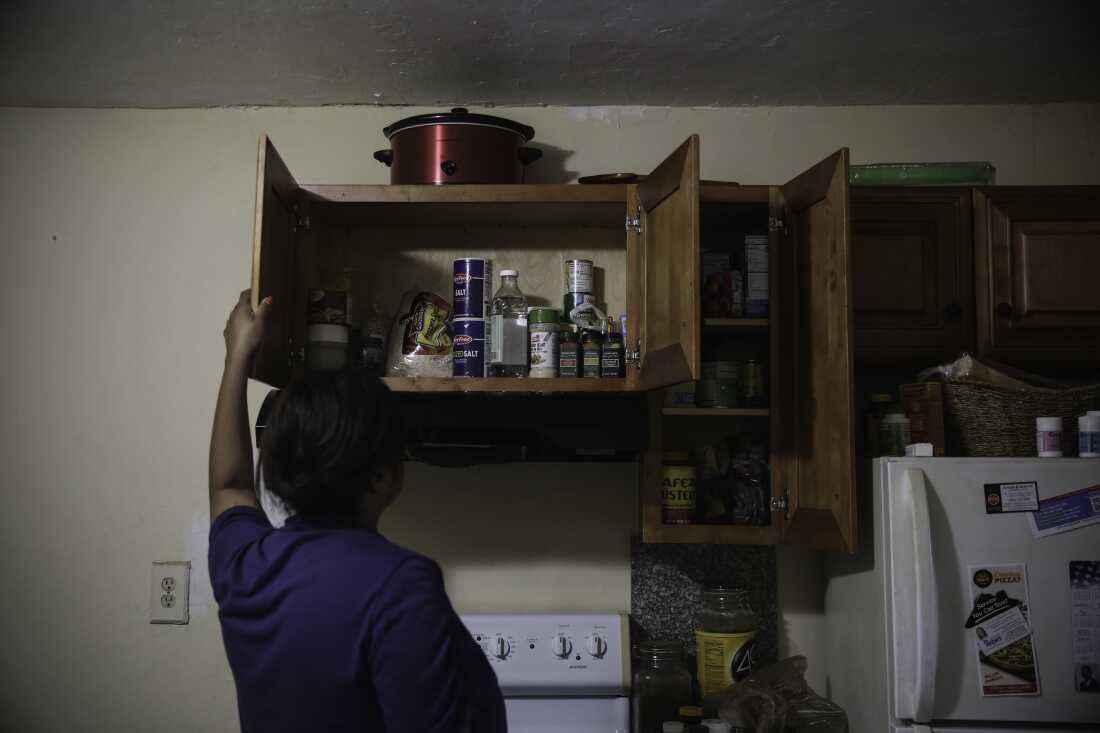
Larrieux opens her kitchen cabinet.
Reshma Kirpalani for NPR/
hide caption
toggle caption
Reshma Kirpalani for NPR/
Father Reginald Jean-Mary, pastor of Notre Dame D’Haiti Catholic Mission in Miami’s Little Haiti neighborhood, said uncertainty has spread throughout his congregation. Many Haitian families, he said, are afraid to leave their homes, and attendance at church has dropped sharply.
Jean-Mary also questioned the federal government’s decision to end TPS while the State Department continues to advise U.S. citizens not to travel to Haiti. The department says Haiti has been under a national state of emergency since March 2024.
“The same breath you are breathing, that’s what the Haitians are breathing,” Jean-Mary said. “By asking them to go back to a place where people are being killed every day, that you yourself would never go, neither send your family, how would you ask somebody to do that? This is mean-spirited, and there is no humanity into that.”
Asked whether it planned targeted immigration enforcement involving Haitian nationals following the expiration of TPS, a Department of Homeland Security (DHS) spokesperson said the agency conducts law enforcement activities every day across the country but “does not discuss ongoing or future operations.”
DHS General Counsel James Percival also defended the administration’s decision, saying, “What we would say now is it’s closing time, which means you don’t have to go home, but you can’t stay here.”
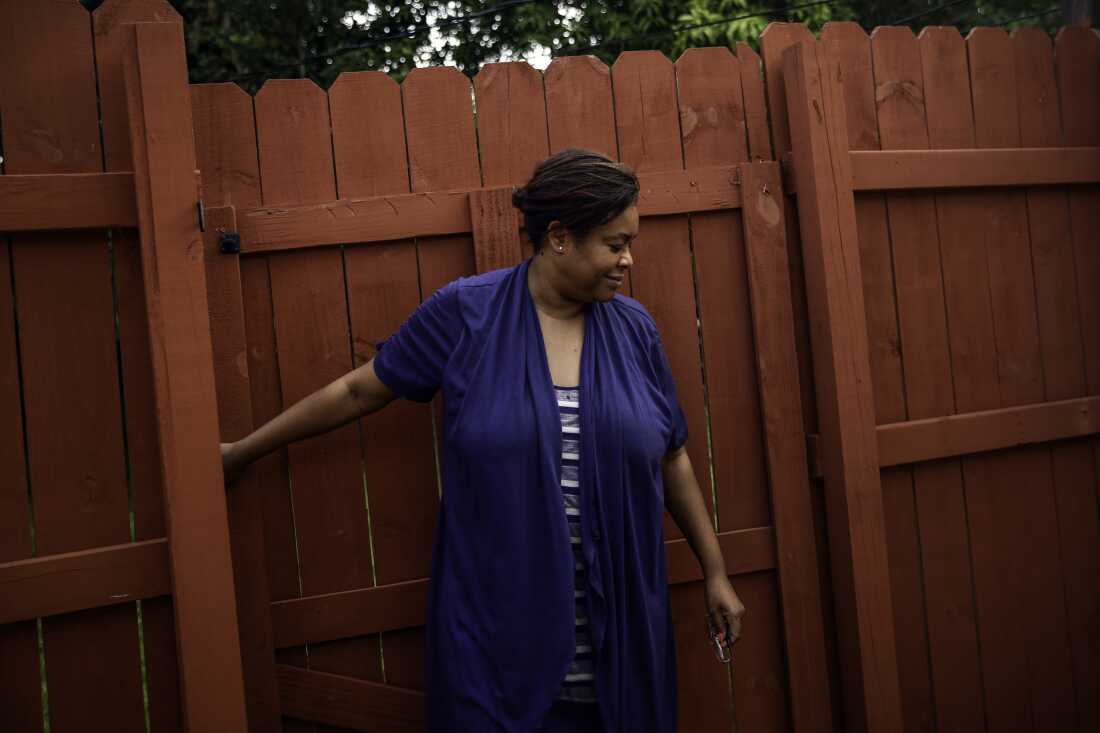
Larrieux closes her gate.
Reshma Kirpalani for NPR/
hide caption
toggle caption
Reshma Kirpalani for NPR/
Two hours after arriving home from her last overnight shift, Larrieux stepped into her backyard. The scent of rain lingered in the grass. Mangoes hung heavy from a nearby tree while roosters crowed. For a moment, she smiled. The scene reminded her of Haiti, a place she still loves. But Larrieux also knows what awaits her there. Armed gangs control much of the country, kidnappings are widespread and violence has displaced more than a million people.
“For many Haitians,” she said, “returning to Haiti is simply not a safe option.”