NEWYou can now listen to Fox News articles!
After every recent election in which a Democratic Socialist or self-described progressive outsider scores an upset victory, the same debate erupts: Is America really moving that far to the left?
Mayor Zohran Mamdani’s rise in New York reignited the question. Before his campaign collapsed, Graham Platner’s meteoric rise in Maine sparked similar headlines. And now, as Democrats look to replace him, many are rallying around Troy Jackson, a self-described “pickup truck progressive.”
The conventional wisdom is that these victories signal a country embracing increasingly liberal ideas.
DSA ROLLS OUT NEW PLATFORM AHEAD OF MIDTERMS
I don’t think that’s what’s happening.
Sen. Bernie Sanders, I-Vt., stands with Troy Jackson (L), who is running for governor of Maine, and now former Democratic U.S. Senate candidate Graham Platner during a “Fighting Oligarchy” tour stop at the Collins Center for the Arts on the University of Maine campus on May 24, 2026, in Orono, Maine. (Joe Raedle / Getty Images)
The rise of democratic socialism isn’t the story.
It’s the symptom.
SOCIALISM’S RISE INSIDE THE DEMOCRATIC PARTY NOW THREATENS THE AMERICAN DREAM
The real story is that millions of Americans have lost confidence in the institutions they once trusted to solve problems, create opportunity and make government work. And when confidence in institutions collapses, voters don’t necessarily move left or right. They become far more willing to embrace candidates who promise to disrupt the status quo.
Gallup’s latest polling should be a flashing warning light. Confidence in America’s institutions remains near historic lows. Congress commands the confidence of just 9% of Americans. Confidence in the criminal justice system, organized religion, higher education, big business and many other institutions Americans once relied upon has eroded dramatically over the past generation.
Look beyond the individual numbers and a striking pattern emerges.
BERNIE-BACKED SOCIALIST WHO ALLIED WITH PLATNER COULD SUPPLANT HIM ON BALLOT
This isn’t a crisis in one institution.
It’s a crisis of confidence in the entire system.
That’s an important distinction because politics doesn’t happen in a vacuum. Voters don’t evaluate candidates based solely on policy positions. They also evaluate whether the institutions surrounding those policies are capable of delivering results.
When Americans stop believing those institutions work, they stop rewarding candidates who promise incremental change.
The real story is that millions of Americans have lost confidence in the institutions they once trusted to solve problems, create opportunity and make government work.
They start looking for alternatives.
Some find them on the right.
Some find them on the left.
But almost all of them are looking for outsiders.
That’s what made Platner’s campaign so compelling before it unraveled. His appeal wasn’t simply about progressive policy. He represented a rejection of politics as usual. His outsider status became part of his message.
The same is true of Mamdani.
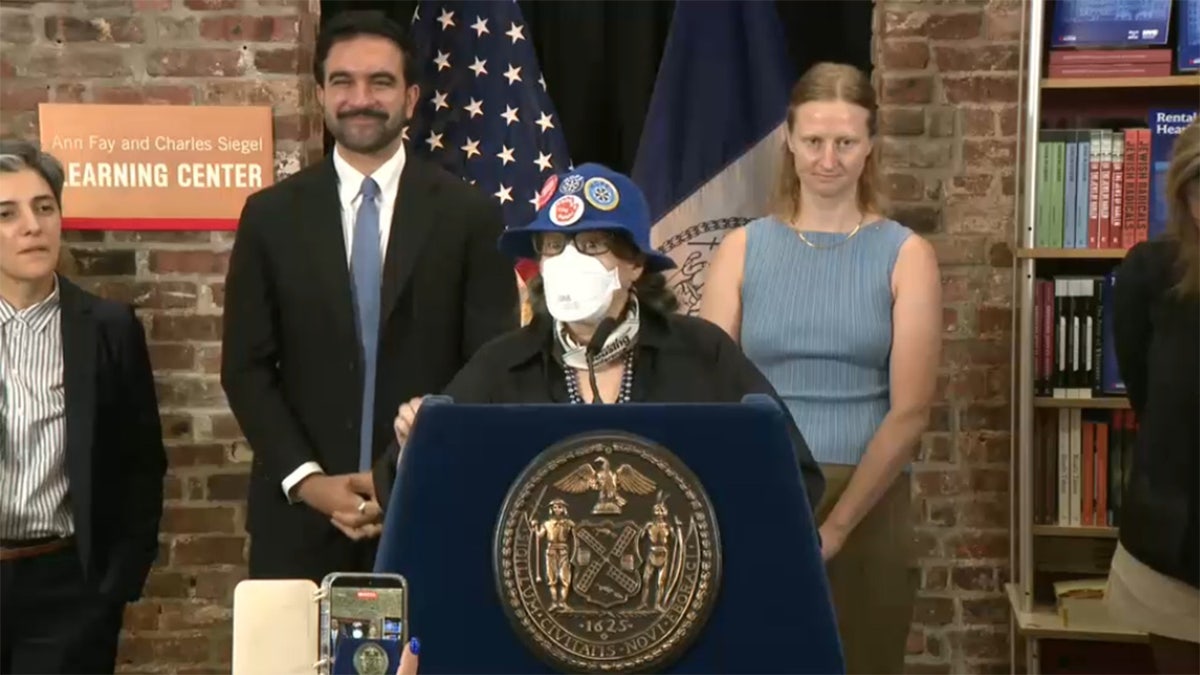
HOPE Tenant Union member Antonia Marrero called evictions a form of “violence” as New York City Mayor Zohran Mamdani smiled behind her during a press conference, drawing criticism from conservatives online. (Fox News)
Whether you agree with his policies or not, his supporters aren’t simply voting for a platform. They’re voting for disruption. They’re voting against institutions they believe have failed them.
And look at what happened in Maine after Platner exited the race.
Many Democrats didn’t immediately search for the safest establishment replacement. Instead, attention quickly shifted to Jackson — a candidate who proudly brands himself a “pickup truck progressive” and who has built his career positioning himself as a champion of working people against entrenched interests.
Different state.
Different ideology.
The same political demand.
We’re seeing versions of this story play out across the country.
Candidates who promise to challenge institutions are outperforming candidates who promise simply to manage them.
The labels vary.
The frustration does not.
This is why I believe we continue to misread this political moment.
The defining divide in American politics is no longer simply Democrat versus Republican.
When Americans stop believing those institutions work, they stop rewarding candidates who promise incremental change.