Oklahoma’s outgoing Republican governor, Kevin Stitt, accused Drummond of “weaponizing” the attorney general’s office to retaliate against Trump. In a video message on Facebook, he framed the smelter as key to protecting America’s national security interests, given that China accounts for about 60% of the world’s annual output. Aluminum is used to make not only household products and construction materials but also fighter jets, warships, helicopters, and ammunition.
Drummond, for his part, has denied any ulterior motives. He said he filed his lawsuit in response to the developers’ air-quality permit application, which they submitted on May 19, the news site Oklahoma Watch reported.
“A primary aluminum smelter does not belong in a community’s backyard, and its emissions do not respect property lines,” Drummond said in his initial statement, adding that winds could carry pollutants into the surrounding northeastern Oklahoma communities.
What the new smelter might mean for Oklahoma
Putting aside the messy governor’s race, the aluminum smelter will undoubtedly change the landscape in Inola, which hails itself as the world’s “hay capital” and is home to many thousands of heads of cattle. The industrial facility is set to span 350 acres along the Verdigris River, where every year it will convert raw materials into 750,000 metric tons of aluminum, not far from schools, homes, and farms.
Last fall, the climate advocacy group Industrious Labs conducted a statewide survey to gauge Oklahomans’ views on the proposed smelter. Some 62% of respondents said they supported the project. But proponents, opponents, and skeptics all said they had at least some environmental worries about bringing heavy industry like aluminum smelting to the state.
“We’ve seen bipartisan support for reshoring domestic manufacturing, and specifically aluminum — both the Biden and Trump administrations are prioritizing this,” said Annie Sartor, senior campaigns director at Industrious Labs. “But concern around local air and water pollution is also bipartisan. People are concerned about dirty industry coming into their neighborhoods.”
Traditionally, America’s smelters have spewed significant amounts of pollution, including fluoride and mercury, which can damage crops and livestock. They also release perfluorochemicals — potent and long-lasting greenhouse gases — and emit sulfur dioxide, which can harm people’s respiratory systems and damage vegetation. Smelters have discharged wastewater into rivers and streams, and they generate toxic waste as the lining in the smelting tanks breaks down.
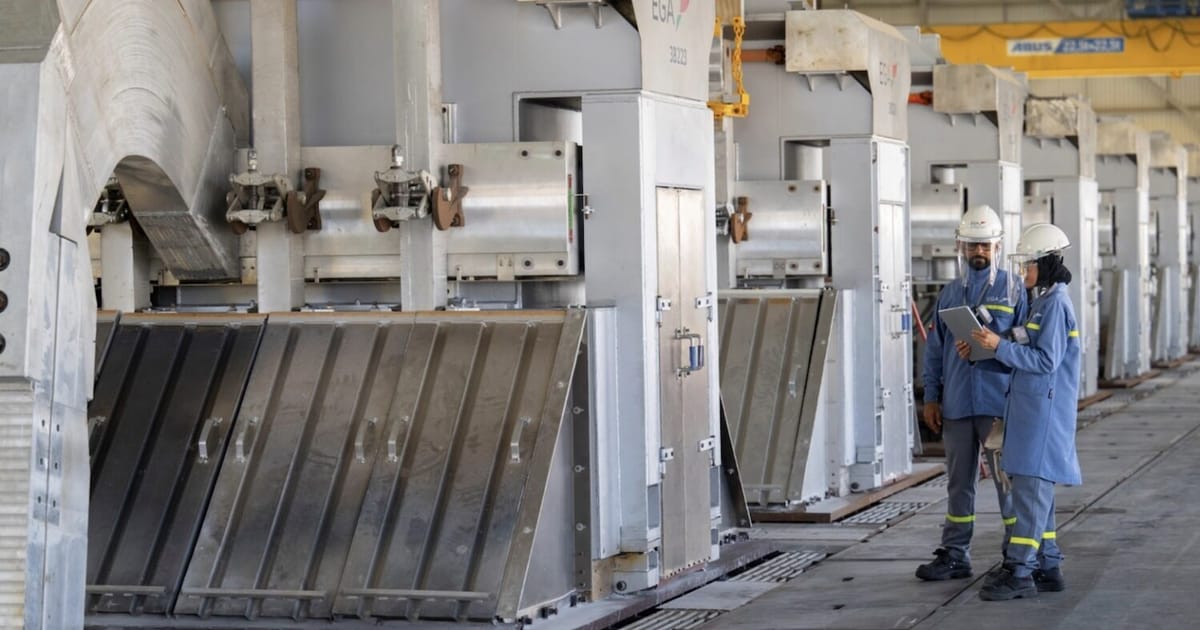
EGA and Century claim the Inola facility will be significantly cleaner than existing U.S. smelters — the last of which was built in 1980. The companies are building the project through a joint venture named Oklahoma Primary Aluminum, which will use the latest version of technologies that EGA has been developing over decades.
“This facility is designed to be the most modern aluminum plant in the world,” Oklahoma Primary Aluminum said in a statement to Canary Media. On their website, the developers say the smelter will be “highly controlled, with multiple environmental safeguards in place,” including for filtering and monitoring pollution and reducing emissions and energy use.
Oklahoma Primary Aluminum also nodded to questions about the smelter’s enormous draw on the region’s grid. Developers have been negotiating a power agreement for more than a year with Public Service Company of Oklahoma, a subsidiary of the utility giant AEP. Any deal will need to be reviewed through a regulatory process overseen by Oklahoma’s public utilities commission.
“A key purpose of that process is to assess and minimize potential impacts on residential and commercial customers,” the developers said in response to the lawsuit. They added that EGA’s modern smelting technology can reduce electricity use by about a third for every ton of aluminum produced, compared with America’s remaining fleet of aging smelters.